
Description
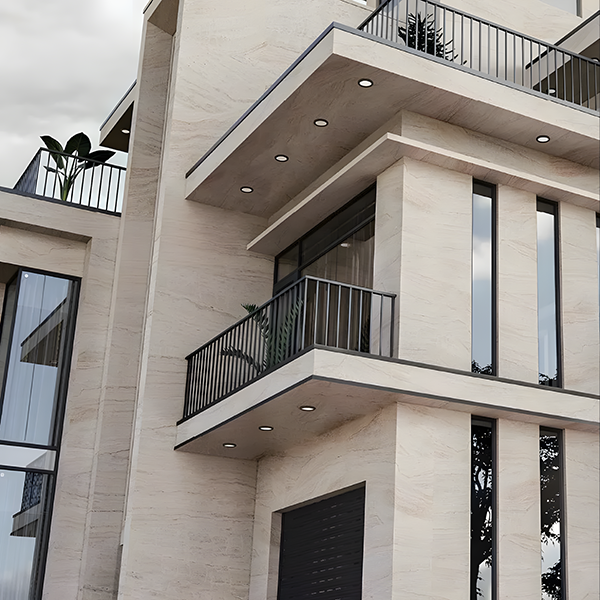
Travertine Abbadabad is a type of sedimentary limestone formed from the accumulation of mineral deposits in hot springs and caves. This stone is a popular choice for modern and classic building facades due to its light colors (mainly white and cream), porous texture, and durable structure. Some of its main advantages include high adhesive properties to mortar, thermal and sound insulation, and easy maintenance. The main mine of this stone is located in the city of Mahalat, in the Nimor region of Markazi Province, where the large-scale extraction ensures its availability in the domestic market.
Physical and Chemical Characteristics
-
Color and Pattern: Travertine Abbadabad is predominantly white and light cream in color. The less soluble sediments (such as iron) present, the lighter and more uniform the color of the stone. In some cases, thin veins may appear, depending on the impurities and compounds present.
-
Texture and Porosity: This stone has a porous structure, resulting in the presence of pores and cavities. This characteristic makes the stone lighter in weight and allows for high adhesive properties to mortar. Additionally, its porosity provides thermal and sound insulation.
-
Strength: Although Travertine Abbadabad performs well in terms of wear and impact resistance, its resistance to freeze-thaw conditions is lower compared to other stones like marble or granite, due to its porous structure.
Processing and Sorting
-
Processing: Travertine Abbadabad is cut in two main forms: veined and non-veined. For non-veined cutting, there is no need to match the natural waves of the stone, and typically, the stone has greater resistance to environmental damage. Common processing methods for this stone include:
-
Polishing: Filling the pores with resin or epoxy and finishing it to create a glossy surface.
-
Leather finish: Surface treatment with special brushes to create a soft and porous texture.
-
Antique, Bush-hammered, and Guillotine finishes: Each of these processes gives the stone a unique appearance, depending on the architectural style.
-
-
Sorting: Due to natural veining and pattern variation, Travertine Abbadabad is available in various grades and sorting. Uniform sorting is crucial for achieving a consistent look, especially for large-scale projects, and obtaining a uniform sort can be time-consuming.
Applications
-
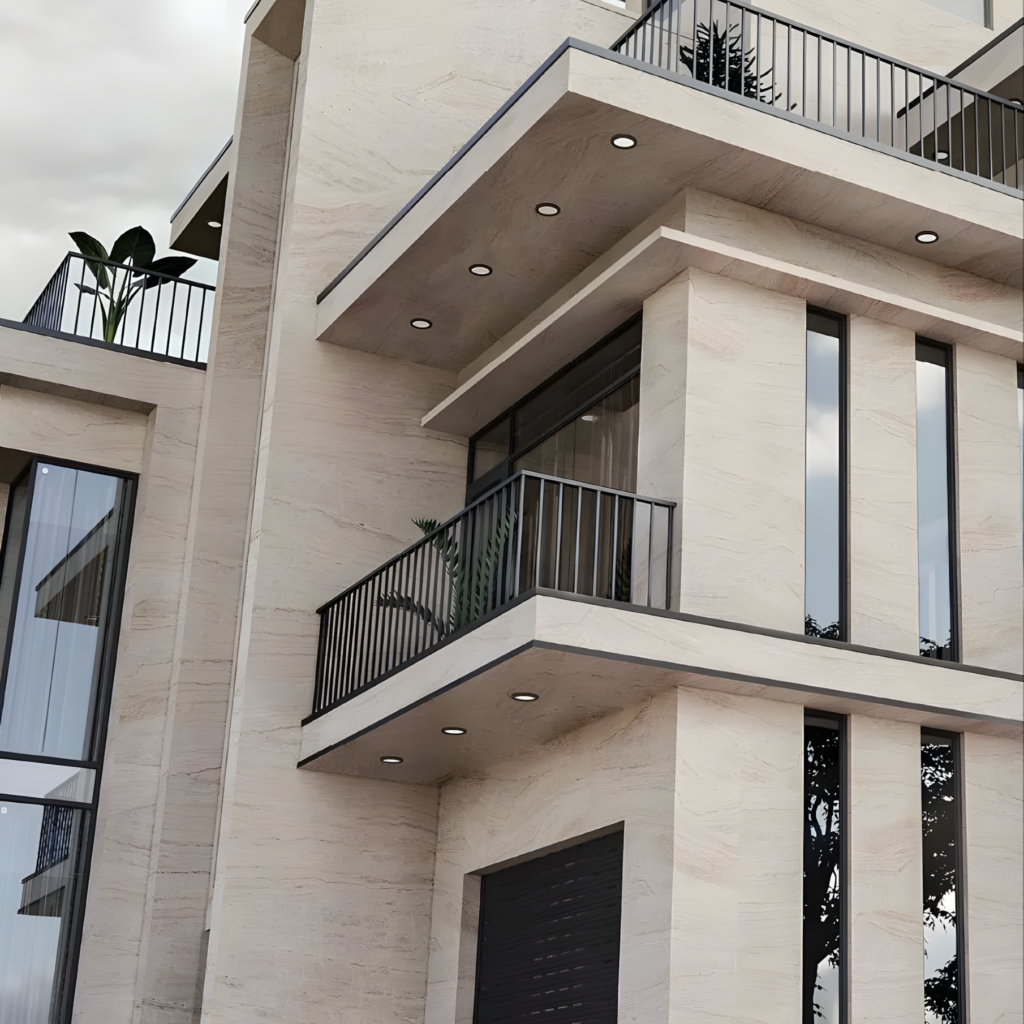
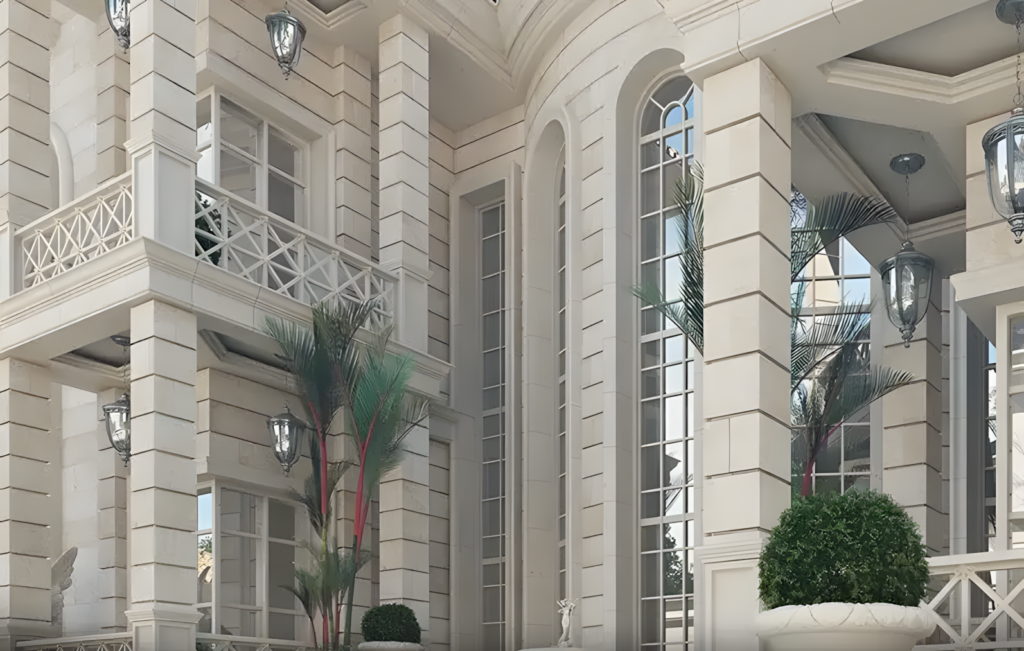
Building Facades: Due to its high resistance to weather factors (rain, sun, heat, and cold) and its luxurious and classic appearance, Travertine Abbadabad is recognized as the best choice for the exterior facades of residential, office, and commercial buildings.
-
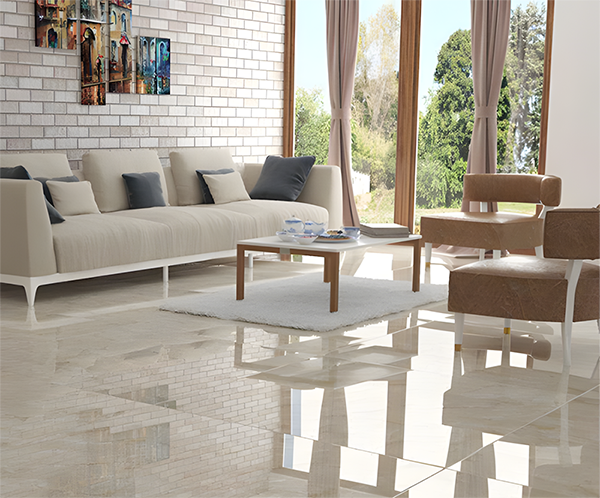
Flooring and Landscaping: With its excellent adhesive properties to mortar and light weight, this stone is used for flooring, stairs, and even decorative elements such as stone railings.
-
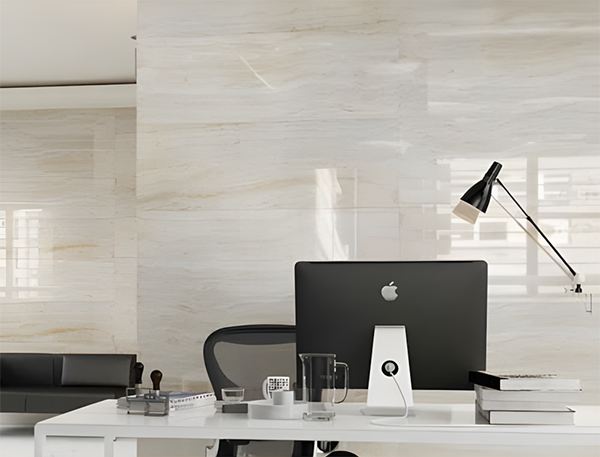
Interior Applications: It is also used in the interior facades of halls, lobbies, and decorative walls, adding an attractive and modern touch to the space.
Advantages
-
Beautiful and Luxurious Appearance: The uniform light color and natural pattern of the stone provide a very elegant and modern look to the building.
-
Thermal and Sound Insulation: The presence of pores and porosity helps provide insulation against heat and sound.
-
High Adhesion: The porous structure ensures that the stone adheres well to mortar, preventing it from separating.
-
Easy Maintenance: The smooth and polished surface makes it easy to clean and maintain.
-
Environmentally Friendly: As a natural material, Travertine Abbadabad is recyclable, and its extraction and production process consumes less energy.
Disadvantages and Negative Points
-
Relatively Low Freeze Resistance: In cold and freezing weather conditions, the resistance of this stone may decrease, and there is a risk of it cracking.
-
High Sorting Variation: Obtaining a uniform sort for large projects can be time-consuming and may also affect the cost.
-
High Water Absorption: Due to its porosity, this stone is prone to water absorption, which may be a disadvantage in some applications (e.g., bathrooms or humid environments).
Technical Analysis of Travertine Abbadabad
| Property | Max | Min |
|---|---|---|
| Specific Weight | 2.4 g/cm³ | 2.0 g/cm³ |
| Abrasive Resistance | 6 cm³/50 cm² | 2.2 cm³/50 cm² |
| Compression Strength | 65 MPa | 50 MPa |
| Porosity | 8% | 5% |
| Water Absorption | 1.5% | 0.03% |
Conclusion
Travertine Abbadabad, with its unique features such as beautiful appearance, uniform light color, high resistance to weather elements, thermal and sound insulation, and exceptional adhesion to mortar, is one of the best options for facades and flooring in buildings. While there are disadvantages such as sensitivity to freezing conditions and high sorting variation, choosing the right sort and proper processing can mitigate these issues. Additionally, the rich quarry in Mahalat (Nimor) ensures the availability of this stone in the domestic market.

Reviews
There are no reviews yet.